
Choosing the right tap can make the difference between a clean, accurate thread and a broken tap stuck halfway down a hole. While all taps do the same basic job — cutting internal threads — the flute design changes how chips are handled, how much cutting force is needed, and which materials and hole types the tap is best suited for.
In this guide, we break down three of the most common tap styles: spiral flute taps, spiral point taps, and straight flute taps — how they’re built, how they work, and when to use each one.
Spiral Flute Tap
A spiral flute tap has flutes that twist around the body of the tap at a helix angle (commonly 25°–45°), similar to a drill bit or an end mill.
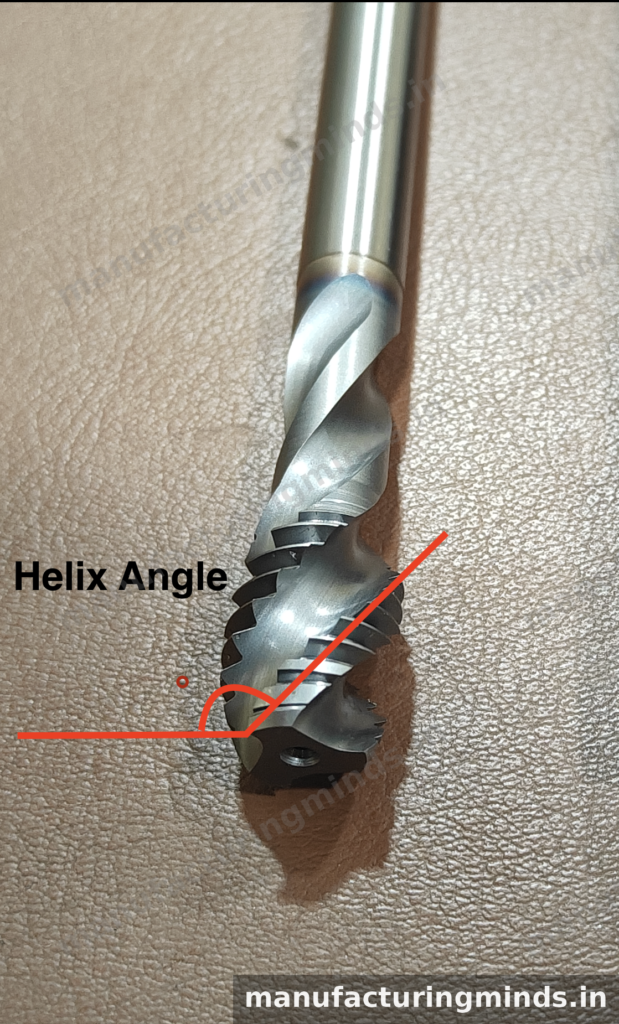
How It Works
The helical flute design pulls chips upward and out of the hole, back toward the tap shank and out through the top.
Best For
- Blind holes (holes that don’t go all the way through)
- Gummy, soft, or ductile materials that produce long, stringy chips (aluminum, mild steel, copper, brass)
- Applications where chip packing at the bottom of the hole would cause tap breakage
Advantages
- Excellent chip evacuation upward, keeping the hole clear
- Reduces risk of chip packing and tap breakage in blind holes
- Produces smoother threads in softer, gummy materials
- Lower cutting forces due to the shearing action of the helix
Limitations
- Slightly weaker core than a straight flute tap of the same size (due to the helix removing more material)
- Not ideal for through-holes where downward chip evacuation is preferred
Spiral Point Tap
A spiral point tap looks similar to a straight flute tap at first glance — the flutes themselves run straight along the body — but the point (the front cutting end) is ground at an angle, forming a “spiral point” that pushes chips forward.
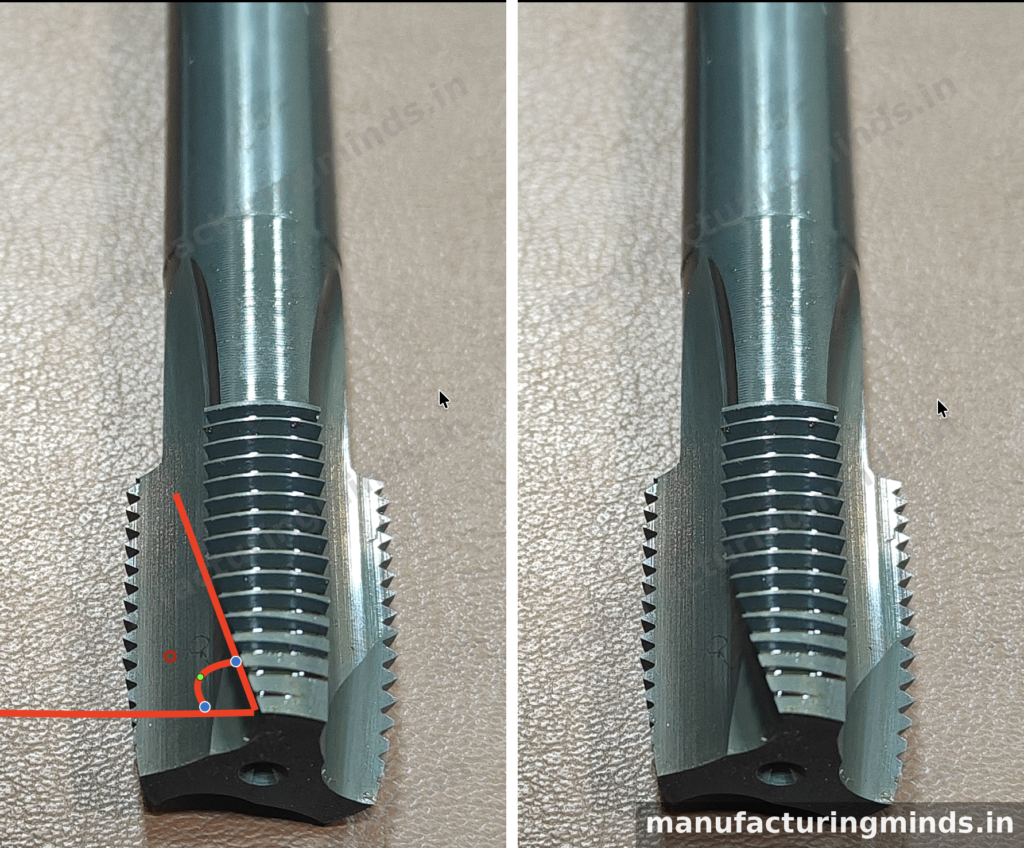
How It Works
The angled point shears the chip and directs it forward, ahead of the tap, pushing it through and out the far side of the hole.
Best For
- Through-holes only (chips need somewhere to exit ahead of the tap)
- High-speed, high-production tapping
- General-purpose use in steel, stainless steel, and most common materials
Advantages
- Faster cutting action with less resistance than straight flute taps
- Continuous, curled chip formation reduces chip clogging
- Longer tool life due to reduced friction
- Great for CNC and production tapping where speed matters
Limitations
- Not suitable for blind holes — chips pushed forward have nowhere to go and will jam or break the tap
- Requires sufficient through-hole depth for chips to clear completely
Straight Flute Tap
The most traditional and versatile tap design, the straight flute tap has flutes running parallel to the tap’s axis, with no helix.
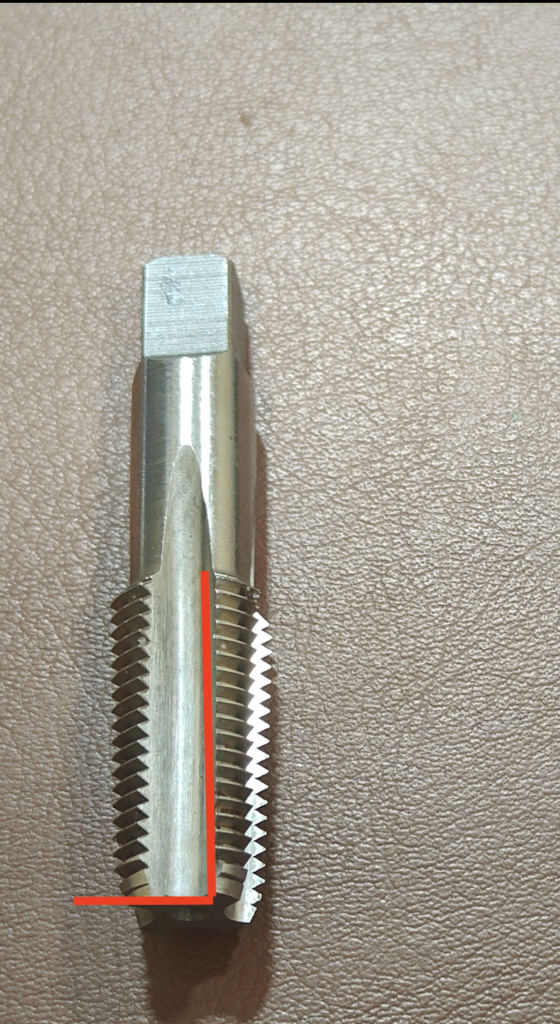
How It Works
Chips break directly at the cutting edge and fall into the flute rather than being actively pushed in any direction. There’s no directional bias, so chip control depends more on drilling depth, tapping speed, and periodic reversal (peck tapping) to clear chips.
Best For
- Brittle materials that produce short, broken chips (cast iron, brass, some plastics)
- General-purpose tapping in both through-holes and blind holes (with care)
- Hand tapping, where the operator can control chip clearing manually
Advantages
- Strongest, most rigid core of the three designs (no helix removing material)
- Simple, cost-effective, and widely available
- Good dimensional accuracy — a common choice for precision thread work
- Versatile across a wide range of materials
Limitations
- Poor chip evacuation in gummy or ductile materials
- Higher risk of chip packing in deep or blind holes
- Often requires slower speeds or peck tapping to manage chips
Quick Comparison Table
| Feature | Spiral Flute | Spiral Point | Straight Flute |
|---|---|---|---|
| Chip direction | Up and out (toward shank) | Forward (ahead of tap) | No directional control |
| Best hole type | Blind holes | Through-holes only | Both (with care) |
| Best materials | Soft/gummy, ductile | General-purpose, steels | Brittle, short-chipping |
| Core strength | Moderate | Moderate-High | Highest |
| Cutting speed | Moderate | Fast | Moderate (manual control) |
| Typical use | Blind hole tapping in aluminum/steel | High-speed CNC production tapping | Hand tapping, general shop use |
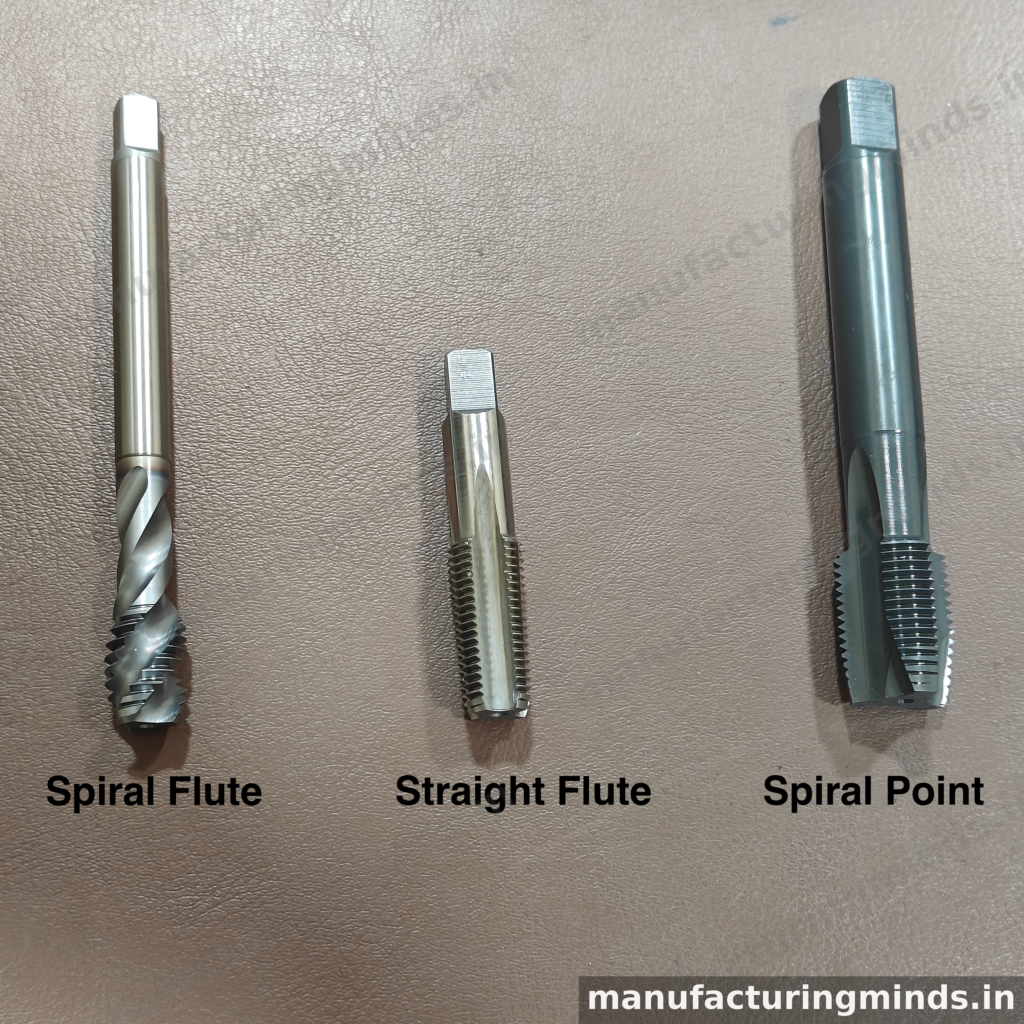
How to Choose the Right Tap
Ask yourself two questions:
- Is the hole blind or through?
- Blind hole → Spiral Flute Tap
- Through hole → Spiral Point Tap (fastest option) or Straight Flute Tap
- What material am I tapping?
- Soft, ductile, gummy material → Spiral Flute Tap
- Standard steels, general production → Spiral Point Tap
- Brittle, short-chipping material → Straight Flute Tap
Getting this choice right up front will save you broken taps, cleaner threads, and faster cycle times on the shop floor.
© 2026 Manufacturing Minds Precision LLP. All rights reserved. This content may not be reproduced without permission.
Hii, Sir I read your article on tap is good and knowledgeable for those person who want to know, learn and work like me in manufacturing industry. I hope that you will keep continue ahead of this types of topic .
Thank you